Diastasis Recti After a C-Section vs Vaginal Delivery, Is It Actually Different?
In this article
- The part that's the same regardless of delivery mode
- The part that does seem to differ
- Does that mean C-section mothers need a different recovery approach?
- What doesn't change the picture
- The Mum21 program
- FAQs
- Is diastasis recti worse after a C-section?
- Can you avoid diastasis recti by having a C-section?
- Do C-section mothers need a different diastasis recovery plan?
- Does an emergency C-section cause worse diastasis than a planned one?
If you had a C-section specifically to protect your pelvic floor, or your body, from a difficult labour, finding out you still have diastasis recti can feel unfair. The honest answer is that delivery mode is not the main cause, pregnancy itself is. But it isn't irrelevant either, and pretending it makes no difference isn't accurate.
The part that's the same regardless of delivery mode
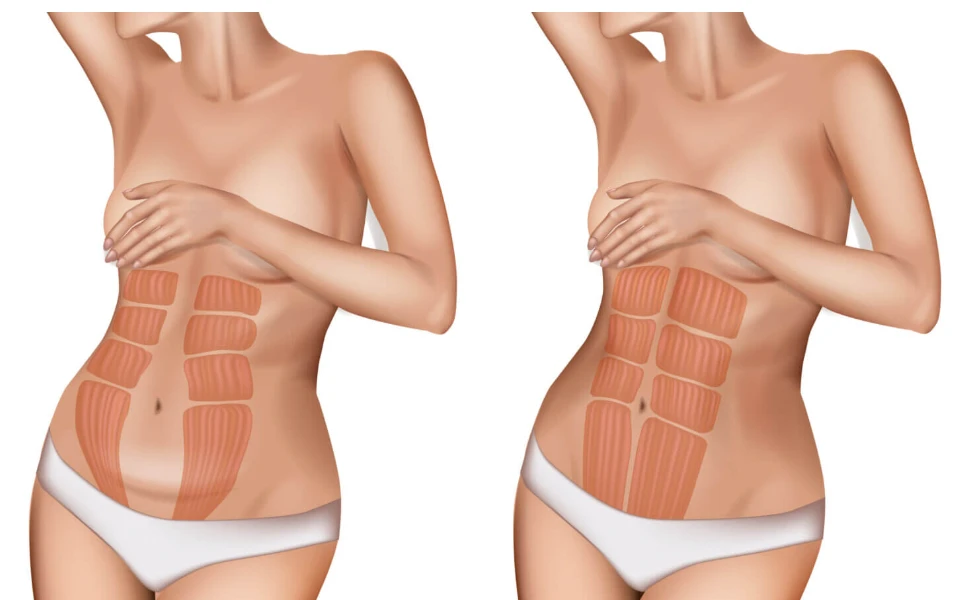
Diastasis recti happens during pregnancy, not during birth. As your uterus grows, the hormone relaxin softens the connective tissue between your abdominal muscles (the linea alba), and the growing baby stretches it sideways. By the third trimester, some degree of separation is close to universal, this happens whether you deliver vaginally or by C-section, and whether the C-section is planned or emergency.
The part that does seem to differ
A cross-sectional study measuring diastasis recti after delivery found that women who had a cesarean section showed a higher prevalence of diastasis recti and a wider inter-recti distance, both at the navel and above it, compared to women who delivered vaginally. Cesarean delivery came out as a significant risk factor for diastasis in the study's statistical analysis, alongside older maternal age and higher BMI.
It's worth holding two things at once here: the effect is real in the data, and it's still a modifier, not the primary cause. Vaginal delivery isn't a guarantee against diastasis either, one large analysis of pelvic floor and abdominal outcomes found meaningful rates of dysfunction across both delivery modes, just distributed differently.
Does that mean C-section mothers need a different recovery approach?
Not a different one, a more patient one. The mechanics of closing a diastasis gap, breath, deep core sequencing, progressive load, are identical regardless of how you delivered. What changes for C-section mothers is the added layer of scar tissue and surgical healing sitting on top of the same muscle separation, which is why our core exercise timeline after C-section is more conservative in the first 6–8 weeks than general postpartum advice.
If you're not sure how wide your gap actually is, start with our two-finger self-check rather than assuming based on delivery mode alone, individual variation is large enough that averages from a study won't tell you your own number.
What doesn't change the picture
- A planned vs emergency C-section doesn't appear to meaningfully change diastasis risk on its own, labour before an emergency C-section affects the pelvic floor specifically more than it affects the linea alba.
- Multiple C-sections don't automatically compound diastasis severity the way they can compound scar tissue and adhesions, covered in our C-section shelf guide.
- "I had a C-section so I don't need to check" is the one assumption worth actively dropping. Persistent diastasis at 6 months postpartum shows up in a meaningful share of C-section mothers, checking costs nothing and changes what you prioritise in early recovery.
The Mum21 program
The 12-Week Recovery Program doesn't branch by delivery mode for the diastasis-closing mechanics, breath, activation, progressive load work the same way for everyone. What does branch is timing: C-section mothers get an extended scar-safe phase before deep core loading begins, exactly the sequencing described in our C-section recovery timeline.
FAQs
Because this guide mentions…
- C-Section RecoveryScar mobility, the C-section shelf and a safe return to core work.
- Diastasis Recti GuideAssess the gap, understand what closes it, and progress safely.
- Pregnancy GuidesSafe loading and prevention across all three trimesters.
- Pelvic Floor GuideWhy leaks and heaviness happen, and how to train the floor properly.
Clinical references
- Impact of delivery mode on diastasis recti abdominis, pelvic floor muscle function and quality of life, cross-sectional studyfrontiersin.org
- Pelvic floor morbidity following vaginal delivery versus cesarean delivery, systematic review and meta-analysisPMC8070303
- Diastasis recti abdominis phenotypes and related delivery factors at 42 days postpartumPMC12203690
Mum21 guides cite peer-reviewed research and professional physiotherapy guidance. They are educational and do not replace individual medical care.
Written by
Ana (Anastasia Uvarova)
Women's Health Physiotherapist
UK-qualified physiotherapist, founder of Alpha Physio Care
UK-qualified women's health physiotherapist and founder of Alpha Physio Care. Ana designed the Mum21 12-week recovery program.
Medically reviewed by
Mum21 Clinical Team
Editorial and clinical review
Physiotherapy-led editorial team
The Mum21 editorial team works with practising women's health physiotherapists to keep every guide accurate and current.
Last clinical review: 2 August 2026
Part of the C-Section Recovery topic hub, a physiotherapist-reviewed collection of guides on c-section recovery.
Join 10,000+ Mums
Honest, physio-backed postpartum recovery tips in your inbox. One email a week. No spam, ever.
No spam. Unsubscribe in one click.
Continue reading
The next steps in the c-section recovery learning path.
- Weight Loss After a C-Section: What Actually Changes, and WhenA realistic, physio-backed answer, not a 30-day plan promising your old body back. What's different about weight after a C-section specifically, and what actually helps. 7 min read · C-Section Recovery
- Is Yoga Safe After a C-Section? A Physio's Honest AnswerThe honest answer is "it depends on the pose and the week," not yes or no. Here's which yoga is genuinely safe after a C-section, which isn't yet, and why the difference matters. 6 min read · C-Section Recovery
- C-Section Recovery Tips: A Physio's Real Punch ListNot a generic "listen to your body" list. Specific, week-anchored things a women's health physio actually tells C-section patients, including the ones nobody mentions before you go home. 8 min read · C-Section Recovery
Related topics
Diastasis Recti
Everything on diastasis recti in one place: how to check your gap at home, what closes it, what makes it worse and how long real recovery actually takes.
15 guidesPelvic Floor
Leaks, heaviness, pressure management and pelvic floor training after birth, explained step by step by a UK-qualified women's health physiotherapist.
3 guidesCore Recovery
Deep core activation, breathing mechanics and progressive strength work that rebuild the postpartum core without doming, coning or pelvic floor strain.
9 guides