Weight Loss After a C-Section: What Actually Changes, and When
In this article
- Why weight loss is slower and different after a C-section
- What a realistic timeline actually looks like
- What actually helps, in order of what matters
- What to skip
- FAQ
- How much weight should I expect to lose in the first month after a C-section?
- Does breastfeeding help you lose weight after a C-section?
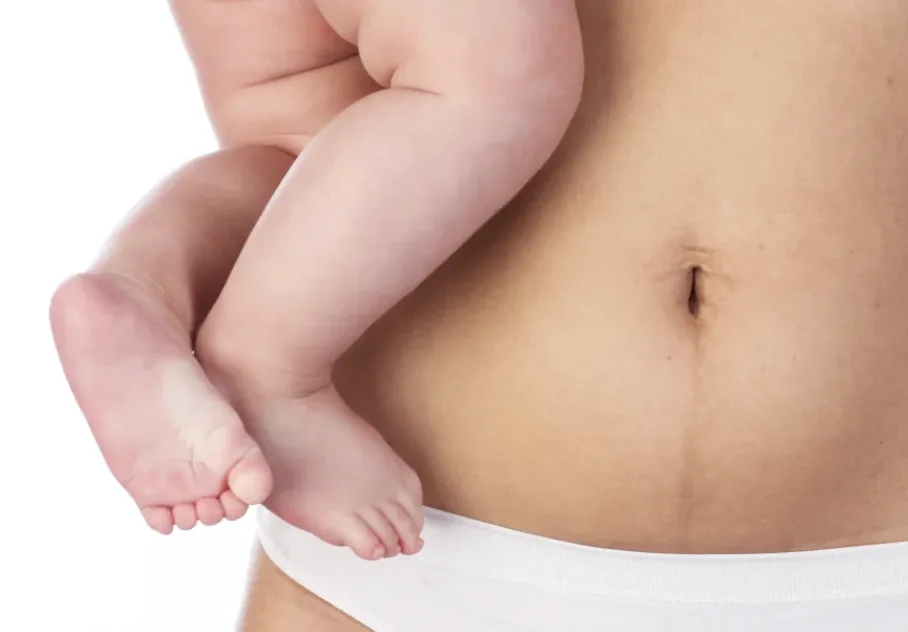
- Why does my stomach still look bigger than expected even though I've lost weight?
- When is it actually safe to start exercising for weight loss after a C-section?
- Where to start
If you searched for this because six weeks have passed and the number on the scale hasn't moved the way you expected, you're not doing anything wrong. C-section recovery genuinely changes the timeline, and most advice online doesn't say why.
Why weight loss is slower and different after a C-section
You're recovering from major surgery, not just birth. Your body is directing energy toward healing an abdominal incision through multiple tissue layers, not just recovering from delivery. That healing has a real metabolic cost, and rushing past it to chase a number on the scale works against your own recovery.
Movement is restricted early on, by necessity. The exercise that would normally support weight management, brisk walking, core work, anything more than gentle activity, is medically off-limits for the first several weeks. That's not a setback to push through faster; it's the actual healing timeline.
Fluid retention and swelling are real and temporary. IV fluids from surgery, plus normal postpartum fluid shifts, can add visible weight and puffiness that has nothing to do with fat and resolves on its own over the following weeks.
Breastfeeding, if you're doing it, changes the equation again. It can support gradual weight loss for some women and doesn't move the needle for others; either is normal, and aggressive calorie restriction while breastfeeding isn't recommended regardless.
What a realistic timeline actually looks like
- Weeks 1-2: Focus is healing, not weight. Some early fluid loss is common and isn't fat loss.
- Weeks 3-6: Walking gradually increases. Weight may plateau or shift slowly. This is expected, not a sign anything is wrong.
- Weeks 6-12, with clearance: Structured movement can begin, in the correct order (breath, then core activation, then load). This is also when most women start seeing steadier, more visible change, because the body is finally able to move more and the surgical healing cost has dropped.
- 3-6 months and beyond: Sustainable, gradual loss is realistic here for most women, alongside rebuilt core and pelvic floor function, if the earlier weeks weren't rushed.
 This is what the timeline is actually for.
What actually helps, in order of what matters
1. Let the core heal correctly first. A poorly rehabbed core (unresolved diastasis recti, an unaddressed C-section shelf) can make your midsection look and feel bigger regardless of your weight, because it changes the shape of your abdomen independent of fat. Fixing this first often changes how your body looks more than the scale does.
2. Eat enough, especially if breastfeeding. Undereating slows healing and, for breastfeeding mothers, can affect supply. Adequate protein specifically supports tissue repair, which is what your incision and abdominal wall are actively doing.
3. Walk before you run, literally. Gradually increasing walking is the single most reliable, safe activity across the entire early recovery window, and it does more for both healing and gradual weight change than any restrictive plan.
4. Add structured exercise once cleared, in the right sequence. Not generic "belly fat" workouts. Breath and alignment, then deep core activation, then progressive loading, the same sequence that protects against diastasis recti and the C-section shelf also happens to be what safely supports weight and shape change longer term.
What to skip
- Any plan promising visible results in the first six weeks. It's working against the surgical healing your body is actually doing.
- Core exercises before clearance, "just to get ahead." This is one of the most common ways a C-section shelf forms.
- Severe calorie restriction, especially while breastfeeding. It slows healing without reliably speeding weight loss.
FAQ
Where to start
Mum21's program is built around this exact sequence, so weight, shape, and core recovery move together instead of working against each other. See the C-section recovery track, or take the 2-minute quiz to find your starting point.
Because this guide mentions…
- C-Section RecoveryScar mobility, the C-section shelf and a safe return to core work.
- Diastasis Recti GuideAssess the gap, understand what closes it, and progress safely.
- Pelvic Floor GuideWhy leaks and heaviness happen, and how to train the floor properly.
- Lateral Breathing BasicsThe breathing mechanic every deep-core exercise is built on.
Written by
Ana (Anastasia Uvarova)
Women's Health Physiotherapist
UK-qualified physiotherapist, founder of Alpha Physio Care
UK-qualified women's health physiotherapist and founder of Alpha Physio Care. Ana designed the Mum21 12-week recovery program.
Medically reviewed by
Mum21 Clinical Team
Editorial and clinical review
Physiotherapy-led editorial team
The Mum21 editorial team works with practising women's health physiotherapists to keep every guide accurate and current.
Last clinical review: 24 August 2026
Part of the C-Section Recovery topic hub, a physiotherapist-reviewed collection of guides on c-section recovery.
Join 10,000+ Mums
Honest, physio-backed postpartum recovery tips in your inbox. One email a week. No spam, ever.
No spam. Unsubscribe in one click.
Continue reading
The next steps in the c-section recovery learning path.
- Is Yoga Safe After a C-Section? A Physio's Honest AnswerThe honest answer is "it depends on the pose and the week," not yes or no. Here's which yoga is genuinely safe after a C-section, which isn't yet, and why the difference matters. 6 min read · C-Section Recovery
- C-Section Recovery Tips: A Physio's Real Punch ListNot a generic "listen to your body" list. Specific, week-anchored things a women's health physio actually tells C-section patients, including the ones nobody mentions before you go home. 8 min read · C-Section Recovery
- Why Your Belly Still Looks Big After a C-Section (It's Probably Not Fat)You've done the exercises. You've watched what you eat. The belly fat exercises aren't working, and there's a reason for that. What's sitting there usually isn't fat at all. 7 min read · C-Section Recovery
Related topics
Diastasis Recti
Everything on diastasis recti in one place: how to check your gap at home, what closes it, what makes it worse and how long real recovery actually takes.
18 guidesPelvic Floor
Leaks, heaviness, pressure management and pelvic floor training after birth, explained step by step by a UK-qualified women's health physiotherapist.
4 guidesCore Recovery
Deep core activation, breathing mechanics and progressive strength work that rebuild the postpartum core without doming, coning or pelvic floor strain.
14 guides