C-Section Recovery Timeline, Week by Week
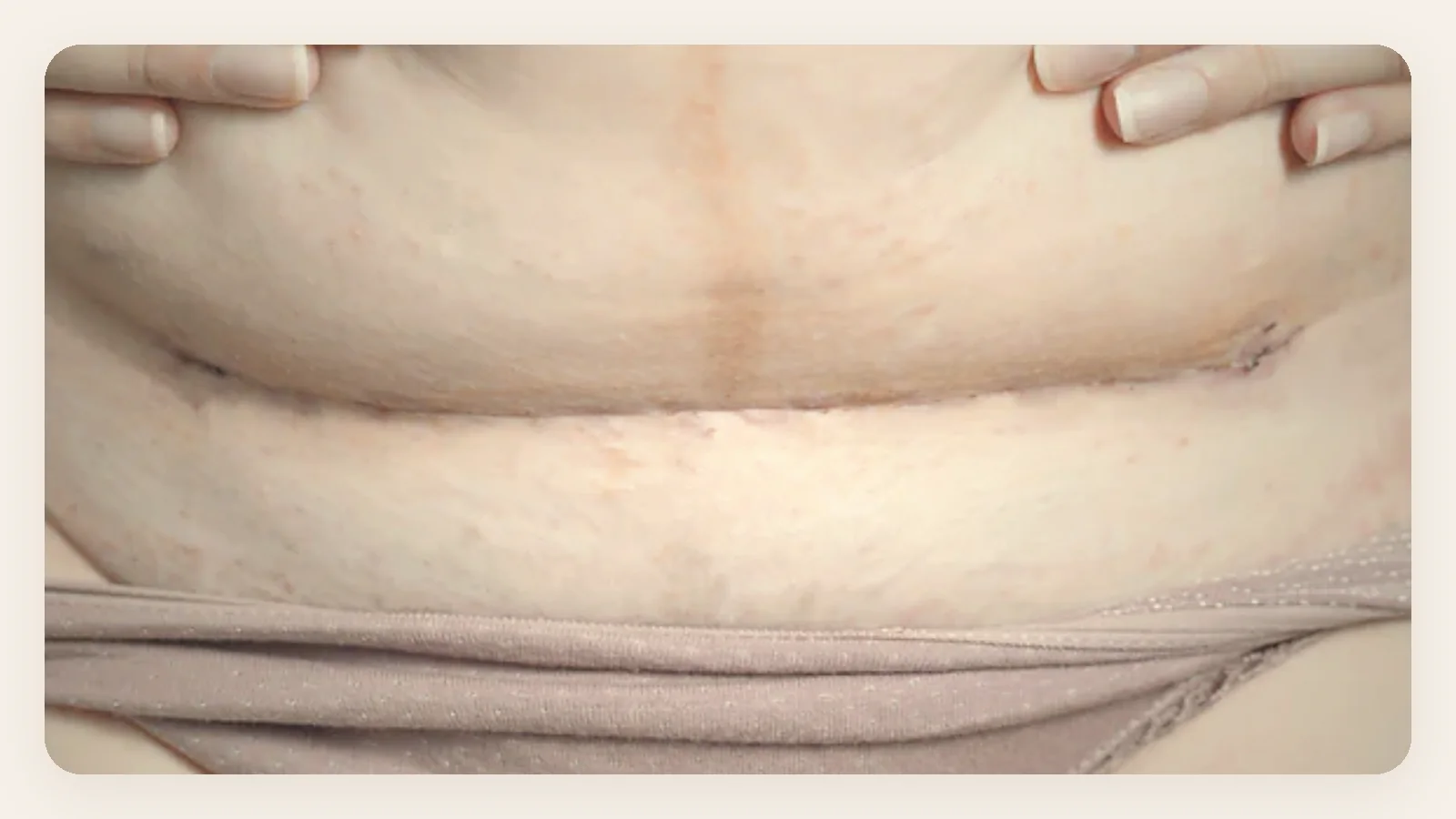
In this article
- Days 0–3: the hospital
- What's normal
- What you should do
- What to avoid
- Week 1: home
- Sleep and posture
- Weeks 2–4: the slow rebuild
- What you can add
- What still hurts
- Emotional health
- Weeks 4–6: clearance approaching
- What's ready
- What's not ready
- At the 6-week check, ask about
- Weeks 6–12: rebuilding the deep core
- The safe progression
- What to still avoid
- Months 3–6: scar work and return to strength
- C-section scar massage
- Return to more challenging activity
- Common C-section-specific concerns
- "The pouch above my scar"
- Numbness around the scar
- Sharp pain during specific movements
- Adhesions and future pregnancies
- When to call your doctor
- The Mum21 program and C-section recovery
- FAQs
- How long is full recovery after a C-section?
- When can I start exercising after a C-section?
- Is it normal to still have belly pain months after a C-section?
- When can I start C-section scar massage?
- Can I get diastasis recti after a C-section?
- Do I need a belly band after a C-section?
A C-section is major abdominal surgery, and it's an increasingly common one. India alone has one of the highest C-section rates in the world, close to 48% in urban private hospitals as of 2024. And yet the postoperative guidance most mothers receive, wherever they gave birth, is a shrug and "you'll be fine in six weeks".
You won't be fine in six weeks. You will be out of the danger zone in six weeks. Actual functional recovery, being able to lift your toddler, run for a bus, sneeze without pain, takes closer to six months, and depends heavily on how you use the first three.
This is the honest week-by-week timeline.
Days 0–3: the hospital
Your abdominal wall has been cut through 7 layers, skin, fat, fascia, muscle sheath, muscle, another layer of fascia, and peritoneum. The uterus itself is also sutured. All of that is now being held together by dissolvable stitches or staples.
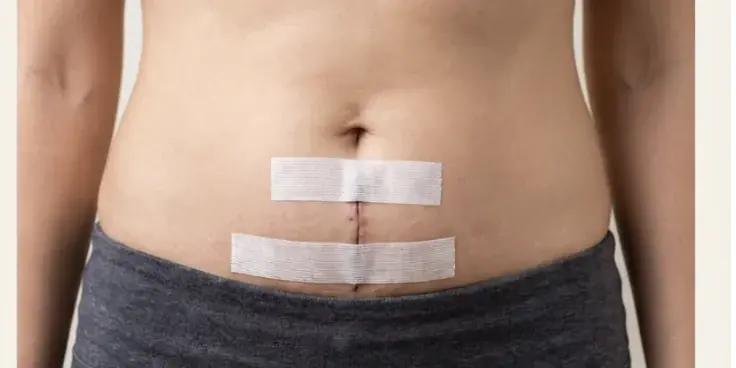 This is what a healing incision actually looks like in the first days, taped, not dramatic, and exactly what to expect.
What's normal
- Pain at the incision that reduces with paracetamol/tramadol
- Gas pain, sometimes worse than the incision pain, from a slowed bowel
- Difficulty sitting up, lifting anything (including your baby the first time)
- Bleeding (lochia), heavy at first
- Feeling like your insides are "loose" or "falling out" when you stand
What you should do
- Move gently within 12–24 hours if your team clears it, sitting on the edge of the bed, then a supported walk. Early movement reduces DVT risk and speeds bowel recovery.
- Log-roll out of bed, roll to your side, drop your legs off, use your arms to push up. Never sit straight up.
- Splint your incision with a small pillow when you cough, sneeze, or laugh.
- Ask for help with the baby's first latch positions, side-lying works well when sitting hurts.
- Start lateral breathing on day 2 or 3, our lateral breathing guide walks you through it. It genuinely helps with pain, gas, and getting your core "reconnected".
What to avoid
- Sitting straight up from lying (always log-roll)
- Any lifting heavier than your baby
- Straining on the toilet, ask for a stool softener
- Holding your breath during any activity
Week 1: home
The hardest week. Pain reduces but exhaustion is total. Your job is not to do anything, it is to let your body heal.
- Walk short distances (bathroom, kitchen), several times a day. Sitting for hours slows healing more than gentle walking.
- Keep the incision clean and dry. Air it briefly after showering.
- Watch for infection signs: redness spreading beyond the incision, fever, foul discharge, sharp increased pain. Call your doctor immediately if any of these appear.
- Continue lateral breathing, 10 breaths 3–4 times a day.
- No stairs multiple times a day if you can avoid it.
Sleep and posture
Sleeping flat can pull on the incision. Prop yourself up with pillows, or sleep on your side with a pillow between your knees. Getting up will still require the log roll.
Weeks 2–4: the slow rebuild
By week 2, most incisions look pink and knitted. Steri-strips (if any) usually come off around day 7–10.
What you can add
- Gentle glute squeezes while lying down (10 reps, 3x a day)
- Ankle pumps and shoulder rolls to keep circulation moving
- Pelvic tilts lying down (flatten your lower back into the bed on exhale)
- Short walks outdoors if weather and support at home allow, 10–15 minutes
What still hurts
- Sneezing, coughing, laughing (keep splinting)
- Twisting to reach something
- Sitting up too quickly
- Wearing tight waistbands
Emotional health
Around week 3 the baby blues can hit hard. Sleep deprivation compounds the physical exhaustion. This is normal, but if the feeling is heavy sadness rather than tearfulness, or if you can't shake it after 2 weeks, please read our postpartum mental health guide and call your doctor.
Weeks 4–6: clearance approaching
Most obstetricians clear women for gentle exercise at the 6-week check. This clearance is medical, "the incision has healed", not functional, "you can now train your abs". The distinction matters.
What's ready
- The outer scar looks pink to red, feels a little tight, no discharge
- You can walk 30 minutes at normal pace without pain
- You can lift your baby without splinting
What's not ready
- Your deep core is essentially switched off, needs re-education
- Your fascia is still remodelling (this continues to 6 months)
- The muscle layer has knitted but is not yet load-bearing
- Your pelvic floor, if you laboured before the C-section, may still be weak
At the 6-week check, ask about
- Diastasis recti (do the two-finger self-check at home, then discuss)
- Bladder function, any leaking, urgency, incomplete emptying
- Bowel function, constipation or straining
- Scar assessment, is it healing well, are there any adhesions forming
- Contraception, especially if you're not planning to be pregnant again soon
Weeks 6–12: rebuilding the deep core
This is the phase most women skip and later regret. The temptation is to jump into "getting back in shape". Don't. This is where you either build a strong foundation or spend the next 5 years chasing back pain and a persistent belly bulge.
The safe progression
Weeks 6–8:
- Lateral breathing progressed to standing and side-lying
- Pelvic floor engagement on exhale
- Bridges (feet flat, lift on exhale), 10 reps
- Cat-cow on hands and knees
- Bird-dog with alternating arm and leg (small range at first)
Weeks 8–10:
- Add clamshells for hip stability
- Wall-supported squats
- Side-lying leg lifts
- Gentle standing marches with core engagement
Weeks 10–12:
- Modified side plank (knees down)
- Loaded bridges (baby on hips)
- Standing rotations with breath coordination
What to still avoid
- Crunches, sit-ups, bicycle abs, planks held to fatigue
- Running or jumping until at least week 12 (and only after pelvic floor is strong)
- Heavy overhead lifting
- Deep twists, backbends, or extreme yoga poses
Months 3–6: scar work and return to strength
Between month 3 and month 6, your scar reaches "mature" strength (about 80% of pre-surgery tissue). This is also the window for scar mobilisation.
C-section scar massage
Once the scar is fully closed and non-tender (usually 6–8 weeks), gentle scar massage prevents adhesions and improves fascial glide:
- Wash hands, use a small amount of vitamin E oil or plain moisturiser
- Trace along the scar with your fingertip, no pressure
- When comfortable, add gentle circles above, below, and along the scar
- Progress to gently lifting and "rolling" the skin over the scar
- 5 minutes a day, 4 days a week for 8–12 weeks
Return to more challenging activity
By 4–6 months, if your deep core is strong and diastasis (if any) is closing:
- Add resistance training, focusing on hinges, squats, rows, pulls
- Return to light running if you have no leaking, no heaviness, and can hop on one leg without pain
- Yoga poses that don't over-stretch the linea alba (avoid deep back bends and full planks for another 2–3 months)
Common C-section-specific concerns
"The pouch above my scar"
Almost all C-section mums develop a persistent overhang above the scar. Some of this is scar tissue thickening, some is nerve damage causing a small area of numb weakness, and some is diastasis just above. Scar massage plus targeted deep core work reduces most of it over 6–12 months. For the full breakdown of causes and what to do about each one, see our C-section shelf guide.
Numbness around the scar
Very common and often permanent to some degree. The small sensory nerves in the abdominal wall are cut during surgery and only partially regrow. This isn't dangerous. Return of some sensation is common up to 2 years post-op.
Sharp pain during specific movements
If a sharp, catching pain appears months or years after your C-section during a specific movement (twisting, reaching), you may have scar adhesions. This responds very well to scar mobilisation and manual physio.
Adhesions and future pregnancies
Scar adhesions between the uterus, bladder, and abdominal wall can make future C-sections more complex. Scar mobilisation from 6 weeks onward significantly reduces this risk.
When to call your doctor
- Fever above 38°C after the first 48 hours
- Redness spreading beyond the incision
- Foul discharge from the incision
- Sharp, worsening pain (as opposed to gradually improving)
- Heavy bleeding beyond 4 weeks
- Any sudden shortness of breath or leg swelling (rule out clot)
The Mum21 program and C-section recovery
The 12-Week Recovery Program is safe and progressive from week 6 onwards for C-section mums. The first 4 weeks focus on the exact deep core + scar work described above, and every video specifies what's safe for a C-section belly. If you're pre-week 6, focus on lateral breathing and gentle walking, and start the program when your doctor gives you the go-ahead.
FAQs
Because this guide mentions…
- C-Section RecoveryScar mobility, the C-section shelf and a safe return to core work.
- Lateral Breathing BasicsThe breathing mechanic every deep-core exercise is built on.
- Pelvic Floor GuideWhy leaks and heaviness happen, and how to train the floor properly.
- Diastasis Recti GuideAssess the gap, understand what closes it, and progress safely.
Written by
Ana (Anastasia Uvarova)
Women's Health Physiotherapist
UK-qualified physiotherapist, founder of Alpha Physio Care
UK-qualified women's health physiotherapist and founder of Alpha Physio Care. Ana designed the Mum21 12-week recovery program.
Medically reviewed by
Mum21 Clinical Team
Editorial and clinical review
Physiotherapy-led editorial team
The Mum21 editorial team works with practising women's health physiotherapists to keep every guide accurate and current.
Last clinical review: 3 August 2026
Part of the C-Section Recovery topic hub, a physiotherapist-reviewed collection of guides on c-section recovery.
Join 10,000+ Mums
Honest, physio-backed postpartum recovery tips in your inbox. One email a week. No spam, ever.
No spam. Unsubscribe in one click.
Continue reading
The next steps in the c-section recovery learning path.
- Weight Loss After a C-Section: What Actually Changes, and WhenA realistic, physio-backed answer, not a 30-day plan promising your old body back. What's different about weight after a C-section specifically, and what actually helps. 7 min read · C-Section Recovery
- Is Yoga Safe After a C-Section? A Physio's Honest AnswerThe honest answer is "it depends on the pose and the week," not yes or no. Here's which yoga is genuinely safe after a C-section, which isn't yet, and why the difference matters. 6 min read · C-Section Recovery
- C-Section Recovery Tips: A Physio's Real Punch ListNot a generic "listen to your body" list. Specific, week-anchored things a women's health physio actually tells C-section patients, including the ones nobody mentions before you go home. 8 min read · C-Section Recovery
Related topics
Diastasis Recti
Everything on diastasis recti in one place: how to check your gap at home, what closes it, what makes it worse and how long real recovery actually takes.
18 guidesPelvic Floor
Leaks, heaviness, pressure management and pelvic floor training after birth, explained step by step by a UK-qualified women's health physiotherapist.
4 guidesCore Recovery
Deep core activation, breathing mechanics and progressive strength work that rebuild the postpartum core without doming, coning or pelvic floor strain.
14 guides