Is Yoga Safe After a C-Section? A Physio's Honest Answer
In this article
- Why the generic answer isn't good enough
- What's genuinely safe, and roughly when
- What to avoid, and until when
- The doming test, applied to yoga specifically
- Why "postnatal yoga" videos often aren't specific enough
- FAQ
- When can I start yoga after a C-section?
- Can yoga help close diastasis recti?
- Is it safe to do yoga videos meant for general postpartum recovery?
- What's the biggest yoga mistake after a C-section?
- Where to start
"Is yoga safe after a C-section" doesn't have a single yes-or-no answer, and most generic postnatal yoga content doesn't say why. It depends entirely on which poses, and how many weeks out you are.
Why the generic answer isn't good enough
Most postnatal yoga isn't built specifically for C-section recovery. It's often adapted from general postpartum yoga, which itself is frequently adapted from general yoga, with a few modifications layered on. That's a problem, because a C-section adds two things general postpartum guidance doesn't fully account for: a healing surgical incision through multiple abdominal tissue layers, and a much higher risk that unsupervised core-loading poses, done too early, cause real harm rather than just being "not optimal."
What's genuinely safe, and roughly when
From early recovery (with your doctor's clearance), once you're moving comfortably:
- Gentle seated or supported breathing practices, focusing on diaphragmatic breath, ribs expanding outward
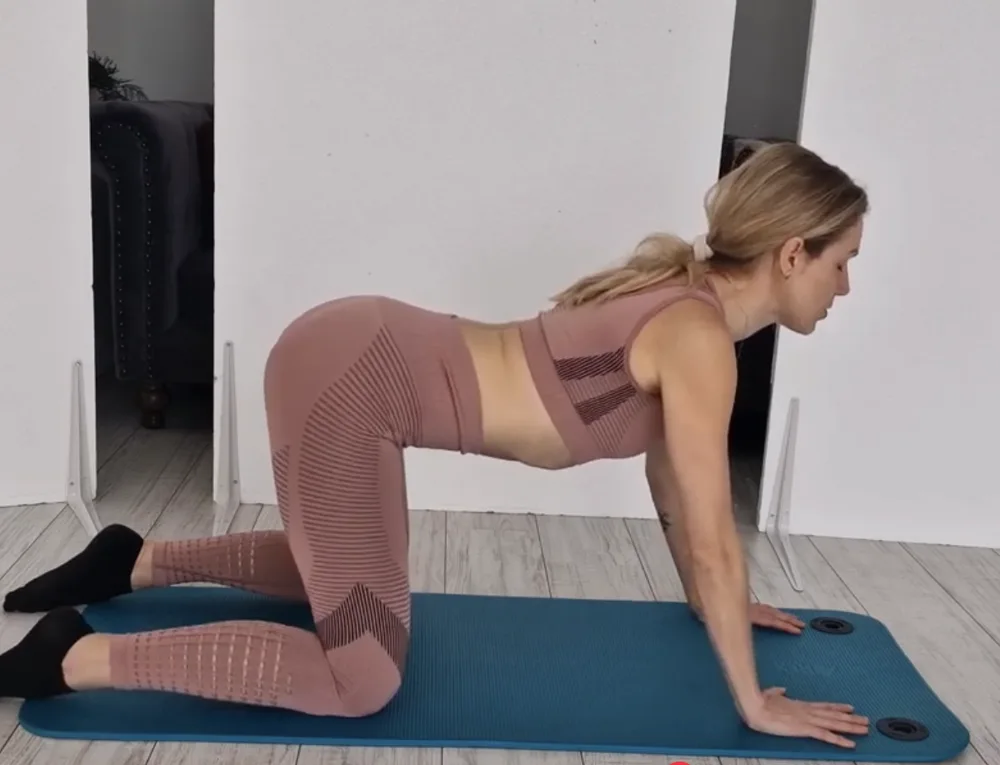
- Very gentle, supported cat-cow, moving within a small, comfortable range, avoiding any pulling sensation at the incision
- Supported restorative poses (legs up a wall with support, gentle supported twists) that don't load the abdomen
From around 6-8 weeks, with clearance, once movement is comfortable:
- Gentle standing poses with good alignment, avoiding deep backbends or anything that visibly domes or bulges your abdomen
- Cat-cow with fuller range, continuing to check for doming
- Gentle hip-opening poses, seated or supported
What to avoid, and until when
Avoid until your core has been specifically assessed and rehabbed, not just "when it feels ready":
- Boat pose, full plank, and any deep core-loading pose that visibly domes or bulges your midline. This is the exact mechanism that widens diastasis recti or stresses an unhealed C-section shelf.
- Deep backbends (full wheel, deep camel) that place direct tension across the healing incision
- Inversions (headstand, forearm stand, full shoulder stand) until well past initial healing and with core and pelvic floor function confirmed, since they significantly increase intra-abdominal pressure
- Any pose that pulls, stings, or pulls at the incision itself, at any stage. Pain there is a stop signal, not something to breathe through
The doming test, applied to yoga specifically
The same check used for general core exercise applies directly to yoga: watch your midline while moving through a pose. If you see a ridge or bulge pushing outward down the centre of your stomach, the pose is asking more of your core than it can currently give safely, regardless of how "gentle" the pose is generally considered.
This is worth checking even in poses that look completely harmless. Doming can show up in seated poses and gentle standing poses too, not just obvious core work.
Why "postnatal yoga" videos often aren't specific enough
Most aren't wrong, exactly, they're just not built around the healing timeline of a surgical incision or the specific risk of diastasis recti and the C-section shelf. A pose sequence designed for a vaginal delivery at 6 weeks isn't automatically appropriate for a C-section at 6 weeks, and generic content rarely distinguishes between the two.
FAQ
Where to start
Mum21's C-section program is built with exactly this specificity, real physio-led movement, checked for doming at every stage, scar-safe from day one. See the C-section recovery program.
Because this guide mentions…
- C-Section RecoveryScar mobility, the C-section shelf and a safe return to core work.
- Belly Doming ExplainedWhat doming signals about pressure management, and how to stop it.
- Diastasis Recti GuideAssess the gap, understand what closes it, and progress safely.
- Pelvic Floor GuideWhy leaks and heaviness happen, and how to train the floor properly.
Written by
Ana (Anastasia Uvarova)
Women's Health Physiotherapist
UK-qualified physiotherapist, founder of Alpha Physio Care
UK-qualified women's health physiotherapist and founder of Alpha Physio Care. Ana designed the Mum21 12-week recovery program.
Medically reviewed by
Mum21 Clinical Team
Editorial and clinical review
Physiotherapy-led editorial team
The Mum21 editorial team works with practising women's health physiotherapists to keep every guide accurate and current.
Last clinical review: 24 August 2026
Part of the C-Section Recovery topic hub, a physiotherapist-reviewed collection of guides on c-section recovery.
Join 10,000+ Mums
Honest, physio-backed postpartum recovery tips in your inbox. One email a week. No spam, ever.
No spam. Unsubscribe in one click.
Continue reading
The next steps in the c-section recovery learning path.
- Weight Loss After a C-Section: What Actually Changes, and WhenA realistic, physio-backed answer, not a 30-day plan promising your old body back. What's different about weight after a C-section specifically, and what actually helps. 7 min read · C-Section Recovery
- C-Section Recovery Tips: A Physio's Real Punch ListNot a generic "listen to your body" list. Specific, week-anchored things a women's health physio actually tells C-section patients, including the ones nobody mentions before you go home. 8 min read · C-Section Recovery
- Why Your Belly Still Looks Big After a C-Section (It's Probably Not Fat)You've done the exercises. You've watched what you eat. The belly fat exercises aren't working, and there's a reason for that. What's sitting there usually isn't fat at all. 7 min read · C-Section Recovery
Related topics
Diastasis Recti
Everything on diastasis recti in one place: how to check your gap at home, what closes it, what makes it worse and how long real recovery actually takes.
18 guidesPelvic Floor
Leaks, heaviness, pressure management and pelvic floor training after birth, explained step by step by a UK-qualified women's health physiotherapist.
4 guidesCore Recovery
Deep core activation, breathing mechanics and progressive strength work that rebuild the postpartum core without doming, coning or pelvic floor strain.
14 guides