Safe Exercise During Pregnancy, A Trimester-by-Trimester Guide
In this article
The strongest predictor of an easier recovery isn't luck. It's how active you stay through pregnancy in a way that protects your core, pelvic floor and joints.
First trimester (weeks 1 to 13)
Do: everything you were doing before pregnancy, at a slightly lower intensity. Walking, swimming, cycling, yoga, strength training all stay in.
Modify:
- Reduce heavy loads by roughly 20%. Focus on form and full-range control.
- Stop competitive sports with fall risk.
- If you were not previously active, start with 20 minutes of walking daily.
Skip:
- Contact sports, downhill skiing, scuba diving
- Hot yoga and hot Pilates (core body temperature spikes are risky in weeks 4 to 10)
Second trimester (weeks 14 to 27)
The belly is now visible, ligaments are looser, and balance shifts.
Do:
- Prenatal Pilates or physio-led strength 2 to 3 times a week
- Walking or swimming 3 to 5 times a week
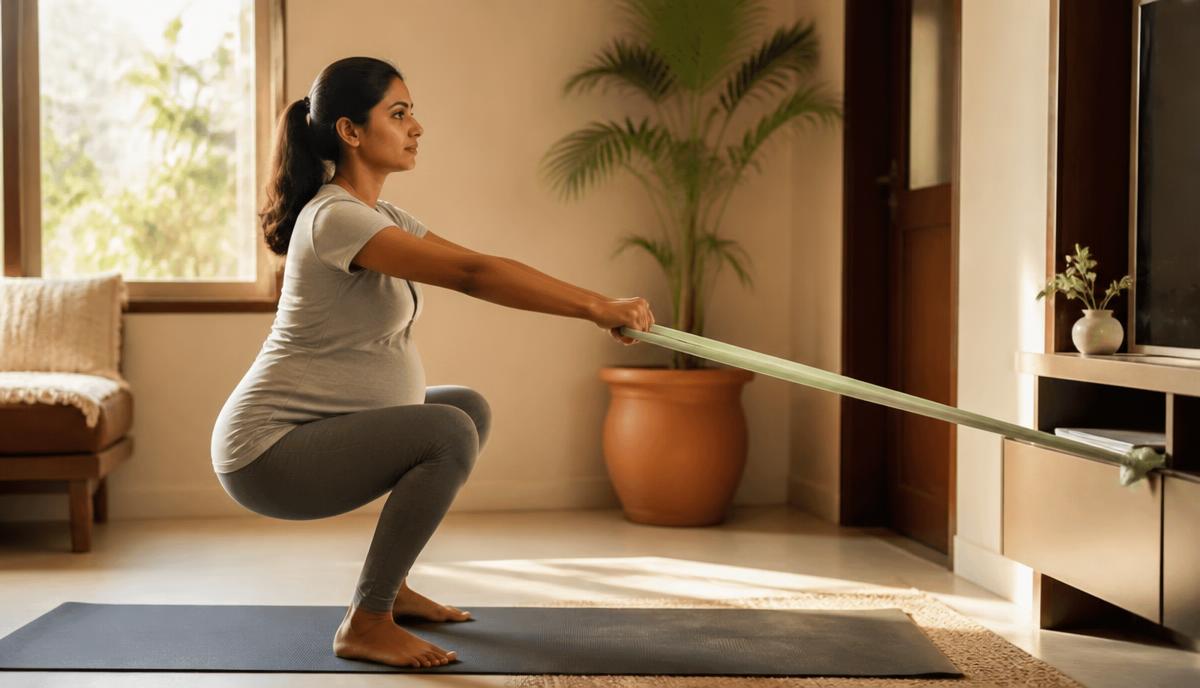
- Squats, lunges, seated rows, chest press, deadlifts to knee height
Modify:
- Move flat-on-back exercises to an incline or side-lying after week 20 (the uterus can compress the vena cava)
- Reduce single-leg balance work if you feel unsteady
- Swap planks for side plank on the knees, or bird-dog on hands and knees
Skip:
- Sit-ups, crunches, Russian twists, V-ups, full planks
- Heavy overhead pressing
- Running if you experience pelvic heaviness, leaking or pain
Third trimester (weeks 28 to 40)
Focus shifts from strength gain to maintenance and birth preparation.
Do:
- Daily walking, 20 to 40 minutes
- Pelvic mobility (cat-cow, deep supported squats, pelvic tilts on a birth ball)
- Upper-body strength (rows, chest press) to support carrying baby later
- Perineal massage from week 34 (reduces tearing risk)
Modify:
- Cut cardio intensity so you can still hold a full conversation
- Sit on a birth ball for feeds and desk work to open the pelvis
Skip:
- Any exercise that causes doming of the belly (a visible ridge popping outward)
- Long flat-on-back positions
- Jumping, running with impact if leaking or heaviness appears
Red flags, stop and call your doctor
- Vaginal bleeding, fluid leaking or contractions
- Dizziness, chest pain, shortness of breath out of proportion to effort
- Sudden calf swelling or pain
- Reduced foetal movement after exercise
The physio rule of thumb
If a movement causes doming, pain, leaking or heaviness, it isn't safe today. Regress the exercise, don't push through. A stronger pregnancy is one where you finish every session feeling better than you started.
FAQs
Because this guide mentions…
Written by
Ana (Anastasia Uvarova)
Women's Health Physiotherapist
UK-qualified physiotherapist, founder of Alpha Physio Care
UK-qualified women's health physiotherapist and founder of Alpha Physio Care. Ana designed the Mum21 12-week recovery program.
Medically reviewed by
Ana (Anastasia Uvarova)
Women's Health Physiotherapist
UK-qualified physiotherapist, founder of Alpha Physio Care
UK-qualified women's health physiotherapist and founder of Alpha Physio Care. Ana designed the Mum21 12-week recovery program.
Last clinical review: 6 June 2026
Part of the Pregnancy topic hub, a physiotherapist-reviewed collection of guides on pregnancy.
Join 10,000+ Mums
Honest, physio-backed postpartum recovery tips in your inbox. One email a week. No spam, ever.
No spam. Unsubscribe in one click.
Continue reading
The next steps in the pregnancy learning path.
- Pelvic Floor Care in Pregnancy, The Muscle Nobody Warned You AboutA strong, coordinated pelvic floor in pregnancy means an easier birth, fewer leaks and a faster recovery. Here's the physio protocol. 6 min read · Pregnancy
- Preventing Diastasis Recti in Pregnancy, What Actually WorksYou cannot bulletproof yourself against diastasis recti, but you can meaningfully reduce your risk with the right movement, load management and breath work through all three trimesters. 6 min read · Pregnancy
- Postpartum Recovery When You Live Outside IndiaYou had your baby in Sydney, London, Toronto, or Dubai, not Mumbai or Bangalore. The confinement support, the physio who understands your context, the culturally familiar guidance — none of it automatically travels with you. Here's what actually matters, wherever you are. 6 min read · Diastasis Recti
Related topics
Diastasis Recti
Everything on diastasis recti in one place: how to check your gap at home, what closes it, what makes it worse and how long real recovery actually takes.
18 guidesC-Section Recovery
Physio-led guidance on cesarean healing: scar mobility, the C-section shelf, safe timelines and exactly when to restart core work after your surgery.
11 guidesPelvic Floor
Leaks, heaviness, pressure management and pelvic floor training after birth, explained step by step by a UK-qualified women's health physiotherapist.
4 guides