Belly Doming, What It Means and How to Fix It
In this article
- What doming actually is
- Why it's a red flag
- The three most common triggers
- How to make it stop
- The exhale-lift technique
- Regressions that stop the dome
- The one exercise that fixes doming faster than any other
- When to see a physio
- FAQs
- Can doming happen without diastasis recti?
- How long until doming goes away?
- Is it safe to do yoga if I'm doming?
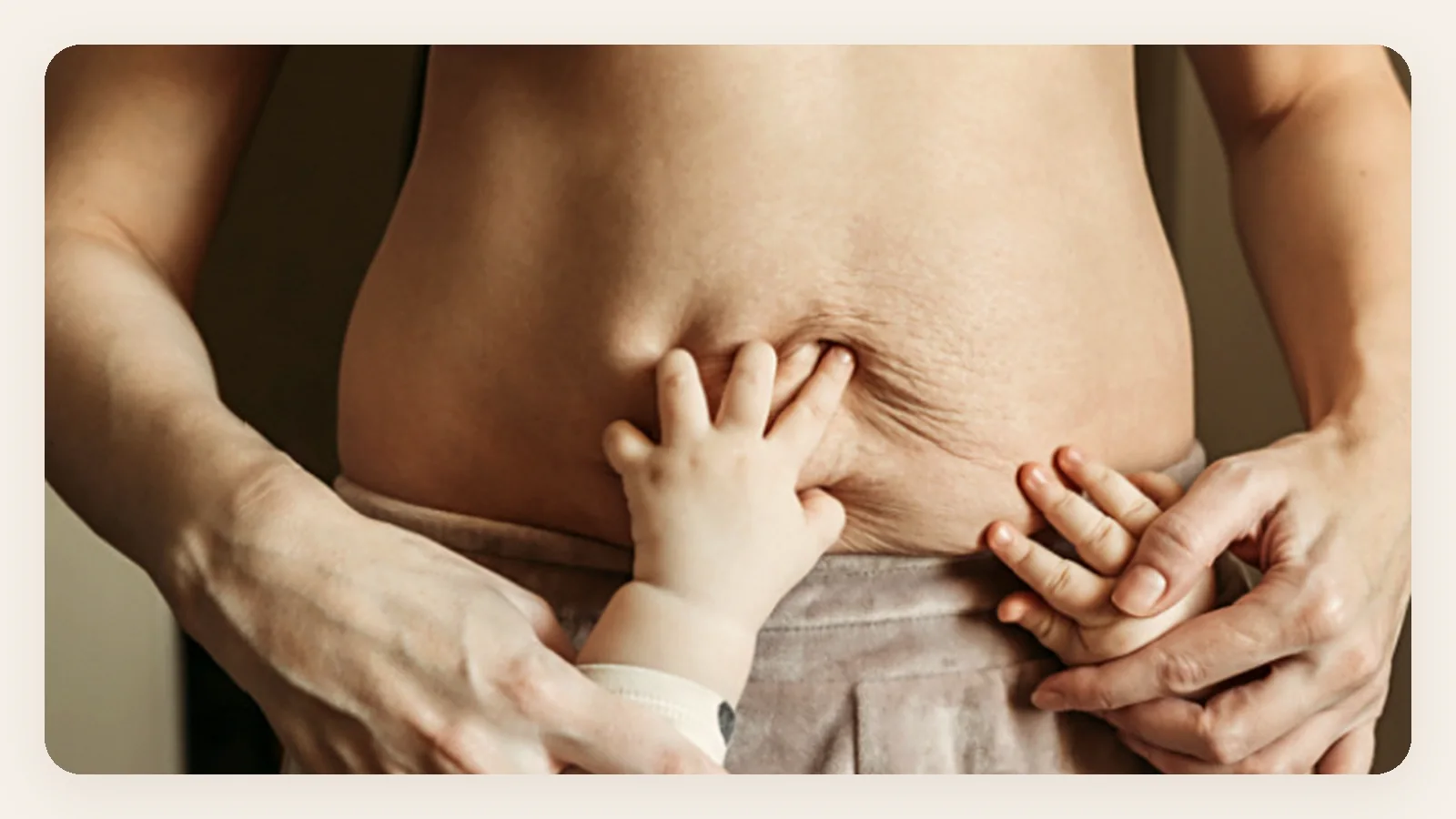
You lift a laundry basket or push up from the sofa and a firm ridge appears down the middle of your belly, like a football poking outward. That's doming. It's telling you something specific, and once you know what, it's fixable.
What doming actually is
Doming (also called coning) is what happens when intra-abdominal pressure rises but the deep core and linea alba can't contain it. The pressure pushes forward through the weakest point, usually the stretched connective tissue between the ab muscles. The visible ridge is your organs being pushed against thin fascia.
Why it's a red flag
Every dome is a moment your linea alba is being stretched further, exactly the opposite of what you want in recovery. If you keep training through doming, you can widen the gap even while feeling like you're doing "core work".
The three most common triggers
- Sitting up from lying down. Instant, obvious doming. Always roll to your side and push up with your arm instead.
- Planks, push-ups, mountain climbers. Too much load for the tissue's current capacity.
- Lifting the baby out of a cot, or a full laundry basket, without exhaling first.
How to make it stop
The rule: exhale first, engage, then move.
The exhale-lift technique
- Before you lift anything, inhale to the sides of your ribs
- Exhale slowly through pursed lips
- As you exhale, feel your lower belly gently draw in and up
- Now lift, keeping the exhale going
Try this every single time you pick up the baby for one week. It becomes automatic within 10 days.
Regressions that stop the dome
If a movement causes doming, don't quit it, regress it:
| Doming exercise | Regression |
|---|---|
| Full plank | Side plank on knees, or wall plank |
| Sit-up | Head lift only, on an exhale |
| Push-up | Wall push-up, or push-up on knees |
| Deadlift | Kettlebell squat with light weight |
The one exercise that fixes doming faster than any other
Heel drops with a full exhale.
- Lie on your back, knees bent at 90 degrees, shins parallel to the floor (tabletop position)
- Inhale to the ribs
- Exhale slowly and lower one heel to the floor, tapping the ground
- Return to tabletop as you inhale
- Alternate legs, 10 each side, 3 rounds daily
Watch your belly. If it domes, your leg went too far. Reduce range until the dome disappears. Increase over weeks as your control improves.
When to see a physio
If doming appears on everyday movements like standing up from a chair, walking upstairs, or getting out of bed, book a pelvic health physio assessment. That's a sign the gap needs progressive loading in the right order, not more DIY.
FAQs
Because this guide mentions…
- Pelvic Floor GuideWhy leaks and heaviness happen, and how to train the floor properly.
- Diastasis Recti GuideAssess the gap, understand what closes it, and progress safely.
- Why the Mum Pooch StaysThe difference between fat, bloat and true abdominal separation.
- Lateral Breathing BasicsThe breathing mechanic every deep-core exercise is built on.
Written by
Ana (Anastasia Uvarova)
Women's Health Physiotherapist
UK-qualified physiotherapist, founder of Alpha Physio Care
UK-qualified women's health physiotherapist and founder of Alpha Physio Care. Ana designed the Mum21 12-week recovery program.
Medically reviewed by
Ana (Anastasia Uvarova)
Women's Health Physiotherapist
UK-qualified physiotherapist, founder of Alpha Physio Care
UK-qualified women's health physiotherapist and founder of Alpha Physio Care. Ana designed the Mum21 12-week recovery program.
Last clinical review: 14 June 2026
Part of the Diastasis Recti topic hub, a physiotherapist-reviewed collection of guides on diastasis recti.
Join 10,000+ Mums
Honest, physio-backed postpartum recovery tips in your inbox. One email a week. No spam, ever.
No spam. Unsubscribe in one click.
Continue reading
The next steps in the diastasis recti learning path.
- Postpartum Recovery When You Live Outside IndiaYou had your baby in Sydney, London, Toronto, or Dubai, not Mumbai or Bangalore. The confinement support, the physio who understands your context, the culturally familiar guidance — none of it automatically travels with you. Here's what actually matters, wherever you are. 6 min read · Diastasis Recti
- Pregnant Again With Diastasis Recti: What Changes the Second TimeOne study found the single biggest jump in gap width happens between the first and second pregnancy, not the third or fourth. If you're expecting again and never fully closed from last time, here's what that actually means. 7 min read · Diastasis Recti
- How Accurate Is the Finger Test for Diastasis Recti, Really?Your own fingers are a genuinely reliable way to track your own progress over time. They're not the same as an ultrasound. Here's exactly what each is actually good for. 6 min read · Diastasis Recti
Related topics
C-Section Recovery
Physio-led guidance on cesarean healing: scar mobility, the C-section shelf, safe timelines and exactly when to restart core work after your surgery.
11 guidesPelvic Floor
Leaks, heaviness, pressure management and pelvic floor training after birth, explained step by step by a UK-qualified women's health physiotherapist.
4 guidesCore Recovery
Deep core activation, breathing mechanics and progressive strength work that rebuild the postpartum core without doming, coning or pelvic floor strain.
14 guides