Preventing Diastasis Recti in Pregnancy, What Actually Works
In this article
- Why the linea alba stretches
- First trimester, build the base
- Second trimester, protect the seam
- Third trimester, unload and mobilise
- What to avoid all the way through
- The evening 5-minute routine
- FAQs
- Can I completely prevent diastasis recti?
- Is walking enough exercise in pregnancy?
- Should I wear a maternity support belt?
Every pregnant belly stretches. What you do while it stretches decides how well the connective tissue holds up after birth.
Why the linea alba stretches
The linea alba is the seam of connective tissue running down the middle of your abdomen. Relaxin and progesterone soften it during pregnancy so your uterus has room to grow. Every pregnancy stretches it. In about 100% of women by the third trimester there is some separation. What we care about is whether it stays stretched after birth.
First trimester, build the base
- Learn lateral breathing. Inhale into the sides and back of the ribs, exhale slowly. Aim for 3 sets of 10 breaths daily.
- Keep training your legs. Squats, sit-to-stands and step-ups load the core without pushing on the abdominal wall.
- Stop crunches, sit-ups and planks held to fatigue. Swap for bird-dog, side plank on the knees and dead bugs done with a full exhale.
Second trimester, protect the seam
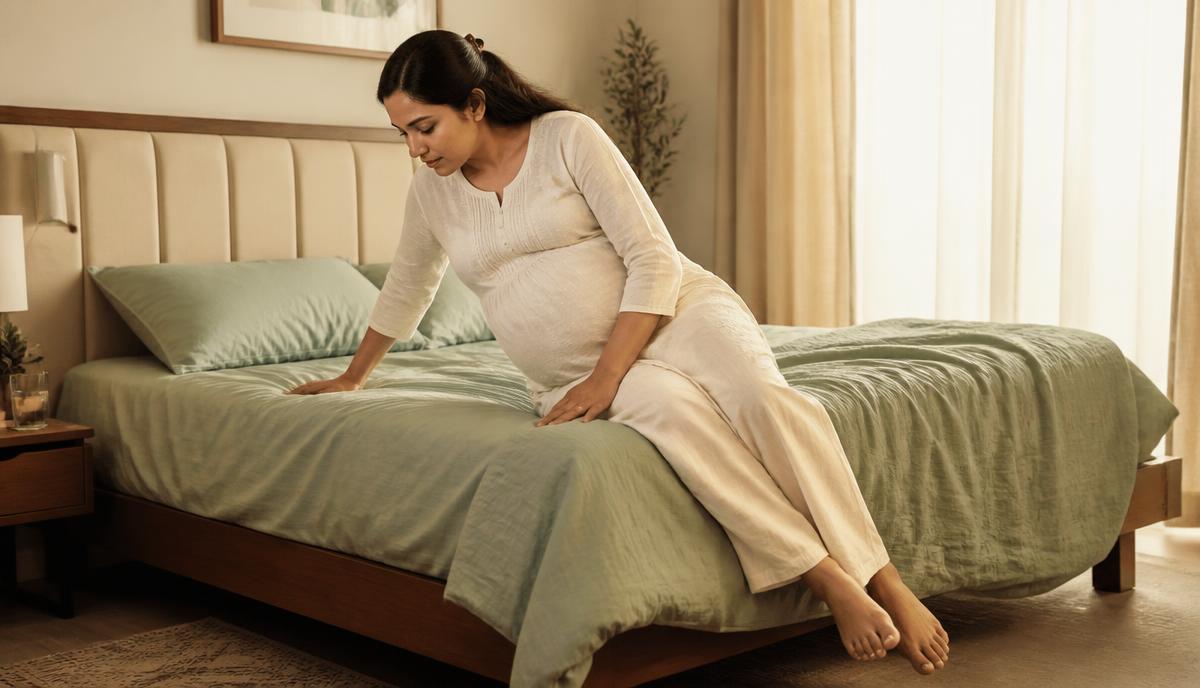
- Roll to your side to get up from lying. Never crunch straight up, it visibly domes the belly and stresses the linea alba.
- Lift smart. Exhale on the effort. Keep the load close. Split heavy tasks into two trips.
- Watch posture. As the bump grows the pelvis tilts forward. Gently tuck the tailbone, lengthen the back of the neck.
Third trimester, unload and mobilise
- Reduce standing time in one block. Sit or walk to reset every 30 minutes.
- Use a support belt only for symptom relief, not all day. Passive support switches off the very muscles you need to stay active.
- Keep walking daily. 20 to 40 minutes at a conversational pace maintains circulation and pelvic mobility.
What to avoid all the way through
- Crunches, sit-ups, full planks and Russian twists
- Heavy overhead lifting after week 20
- Holding your breath during any effort (bracing without breath spikes intra-abdominal pressure)
- "Sucking in" the belly all day
The evening 5-minute routine
Every night before bed, run this:
- 10 lateral breaths on your side
- 10 pelvic tilts on hands and knees (cat-cow)
- 10 bird-dogs, alternating sides, with a slow exhale on each lift
Five minutes. Every night. This is the single most protective habit you can build before birth.
FAQs
Because this guide mentions…
- Pregnancy GuidesSafe loading and prevention across all three trimesters.
- Diastasis Recti GuideAssess the gap, understand what closes it, and progress safely.
- Lateral Breathing BasicsThe breathing mechanic every deep-core exercise is built on.
- Pelvic Floor GuideWhy leaks and heaviness happen, and how to train the floor properly.
Written by
Ana (Anastasia Uvarova)
Women's Health Physiotherapist
UK-qualified physiotherapist, founder of Alpha Physio Care
UK-qualified women's health physiotherapist and founder of Alpha Physio Care. Ana designed the Mum21 12-week recovery program.
Medically reviewed by
Ana (Anastasia Uvarova)
Women's Health Physiotherapist
UK-qualified physiotherapist, founder of Alpha Physio Care
UK-qualified women's health physiotherapist and founder of Alpha Physio Care. Ana designed the Mum21 12-week recovery program.
Last clinical review: 2 June 2026
Part of the Pregnancy topic hub, a physiotherapist-reviewed collection of guides on pregnancy.
Join 10,000+ Mums
Honest, physio-backed postpartum recovery tips in your inbox. One email a week. No spam, ever.
No spam. Unsubscribe in one click.
Continue reading
The next steps in the pregnancy learning path.
- Pelvic Floor Care in Pregnancy, The Muscle Nobody Warned You AboutA strong, coordinated pelvic floor in pregnancy means an easier birth, fewer leaks and a faster recovery. Here's the physio protocol. 6 min read · Pregnancy
- Safe Exercise During Pregnancy, A Trimester-by-Trimester GuideWhat to do, what to modify and what to skip in each trimester, so you finish pregnancy strong and start recovery in a better place. 7 min read · Pregnancy
- Postpartum Recovery When You Live Outside IndiaYou had your baby in Sydney, London, Toronto, or Dubai, not Mumbai or Bangalore. The confinement support, the physio who understands your context, the culturally familiar guidance — none of it automatically travels with you. Here's what actually matters, wherever you are. 6 min read · Diastasis Recti
Related topics
Diastasis Recti
Everything on diastasis recti in one place: how to check your gap at home, what closes it, what makes it worse and how long real recovery actually takes.
18 guidesC-Section Recovery
Physio-led guidance on cesarean healing: scar mobility, the C-section shelf, safe timelines and exactly when to restart core work after your surgery.
11 guidesPelvic Floor
Leaks, heaviness, pressure management and pelvic floor training after birth, explained step by step by a UK-qualified women's health physiotherapist.
4 guides