What is Diastasis Recti? A Complete Guide for Postpartum Mothers
In this article
- What diastasis recti actually is
- It's a connective tissue problem, not a muscle problem
- Who gets diastasis recti?
- The signs you probably have it
- How to check yourself in 60 seconds
- Why it matters (it's not just cosmetic)
- Can it heal on its own?
- What actually heals it
- What doesn't work (but Indian aunties still swear by)
- When to see a physio in person
- The takeaway
- FAQs
- Is diastasis recti dangerous?
- Can diastasis recti heal without exercise?
- How long does it take to heal diastasis recti?
- Can I still have diastasis recti years after giving birth?
- Is diastasis recti only from pregnancy?
- Do I need surgery for diastasis recti?
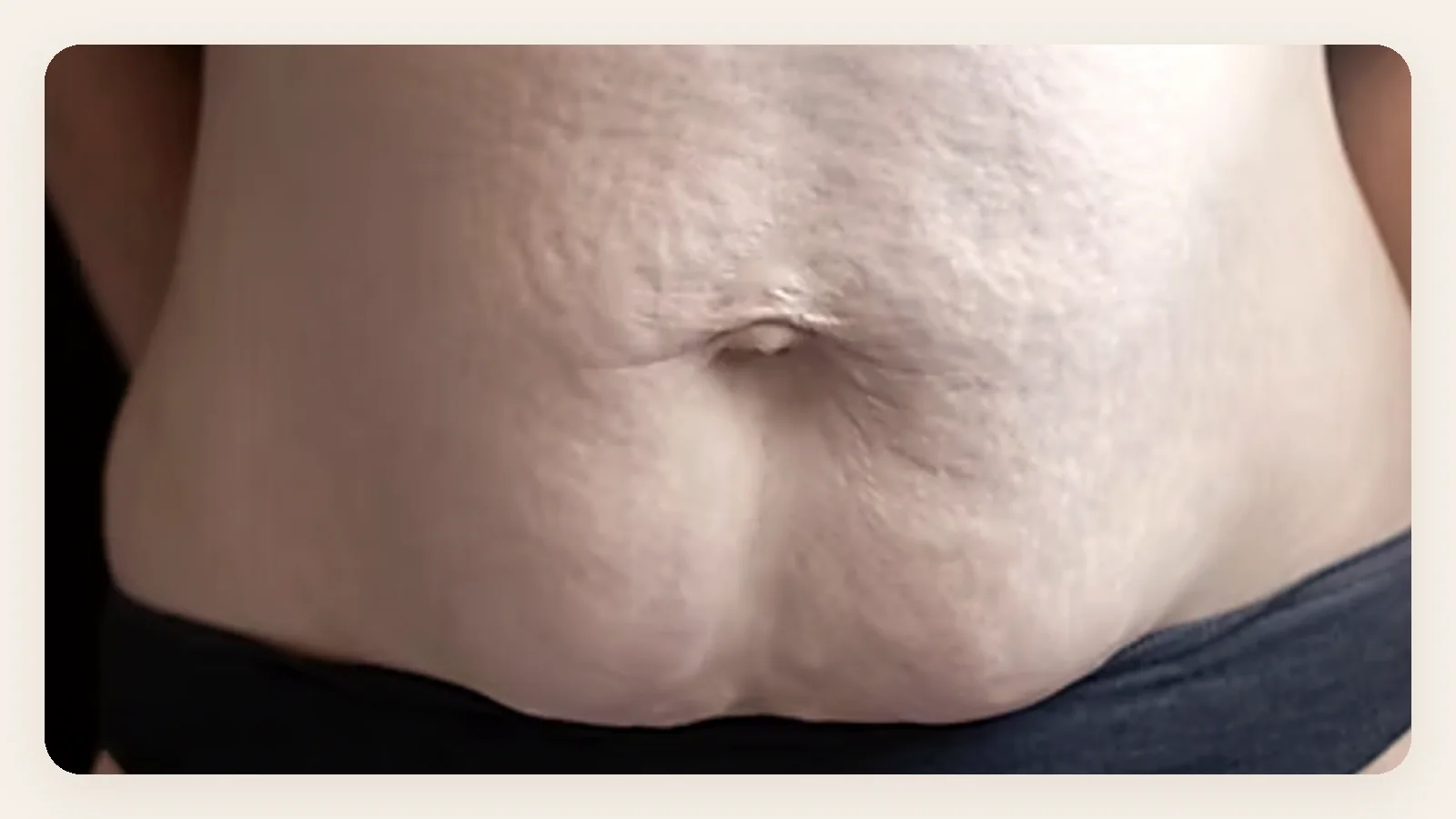
If your belly still looks pregnant months after birth, or you notice a strange doming down the middle when you sit up, there is a name for what's happening. It's called diastasis recti, and it's one of the most common (and most under-diagnosed) postpartum conditions.
Somewhere between 60% and 100% of women develop it in late pregnancy, and roughly 40% still have it a year after giving birth if left untreated. Yet most of us are told it's "just how your body is now". It isn't.
What diastasis recti actually is
Your abdomen has two thick strap-like muscles that run vertically down the front of your belly, one on each side of your navel. They are called the rectus abdominis, and together they make up what most people know as the "six-pack".
Between them runs a strip of connective tissue called the linea alba. During pregnancy, hormones (mainly relaxin) soften this tissue and the growing uterus stretches it sideways to make room for your baby. In most pregnancies the linea alba widens far beyond its normal 1–2 cm.
When the linea alba stays wider than about 2 cm (two finger widths) after birth, it's classified as diastasis recti. In severe cases the gap can be 5 cm or more, wide enough that you can feel your abdominal organs through the front wall.
It's a connective tissue problem, not a muscle problem
This is the piece most people miss. The rectus abdominis muscles themselves are usually fine, it's the linea alba between them that has thinned and lengthened. This is why endless crunches don't fix it and often make it worse: strengthening the muscles pulls them further apart when the tissue between them can't hold them together.
Who gets diastasis recti?
Almost every pregnant woman has some degree of separation by the third trimester, this is normal and necessary. The problem is when it doesn't recover on its own.
Higher risk factors include:
- Being over 35 at the time of pregnancy
- Multiple pregnancies (especially back-to-back)
- Carrying twins or triplets
- A larger baby (over 3.5 kg)
- Being petite or having a short torso
- Weak core going into pregnancy
- History of abdominal surgery
But here's the honest part: diastasis recti happens to strong women, fit women, first-time mums, and mums of four. It happens to yoga teachers and CrossFit coaches. Your body isn't broken, this is what happens when the abdominal wall does the extraordinary work of housing another person.
The signs you probably have it
The most obvious sign is a persistent belly bulge that doesn't respond to diet or exercise. But diastasis recti has a whole cluster of symptoms most mothers don't connect to it:
- A "pooch" that pokes out when you sit up from lying down
- A visible ridge or dome down the middle of your belly during core work
- Lower back pain that started or worsened after pregnancy
- Constant "bloated" feeling even on an empty stomach
- Constipation or feeling like your bowels don't fully empty
- Leaking urine when you sneeze, cough or jump
- Poor posture, ribs flaring outward
- Hip or pelvic pain
- Hernias (usually umbilical or inguinal)
Any three of these together, and diastasis recti should be on your list.
How to check yourself in 60 seconds
You don't need an expensive ultrasound to know if you have it. The two-finger self-check is what most physios use as a first pass.
We walk through the exact steps in How to check yourself for diastasis recti at home, but the short version is: lie on your back, knees bent, place two fingers just above your navel pointing toward your feet, lift your head slowly, and feel for a gap.
A gap wider than two finger-widths or a soft doming that pokes up through your fingers = diastasis recti is likely.
Why it matters (it's not just cosmetic)
There's a common belief in India that diastasis recti is a vanity issue, "your figure isn't the same after kids". That view is wrong and it's actively hurting mothers.
Your abdominal wall is not decoration. It's a load-bearing structure that:
- Stabilises your spine when you lift, carry, cough or sneeze
- Manages internal pressure so your pelvic organs stay in place
- Coordinates with your pelvic floor so you don't leak urine
- Supports digestion and healthy bowel movement
- Protects your back during everyday movements like picking up a toddler
When the linea alba is thin and wide, all of this is compromised. That's why unresolved diastasis recti is a common thread behind chronic postpartum back pain, prolapse, hernias, and the "I can't lift my kid without pain" complaint we hear every week.
Can it heal on its own?
Partly, sometimes. In the first 8 weeks after birth, the linea alba narrows naturally as hormones normalise. If you had a smaller separation to begin with, this may be enough.
By 6 months, if a gap of more than 2 cm is still present, spontaneous healing has usually stopped. The good news is that even at this point, and even years later, structured core rehab closes most gaps significantly and restores function.
We wrote a detailed guide on this: Can diastasis recti heal naturally?
What actually heals it
The scientific consensus is clear and boring: specific, progressive, breath-linked deep core exercises done consistently over 8–16 weeks.
The keyword is specific. Random ab work makes diastasis worse. What works is:
- Lateral breathing to restart the deepest abdominal muscle (transversus abdominis)
- Pelvic floor + TVA coordination on the exhale
- Progressive loading through positions that don't dome the belly
- Functional patterns for lifting, carrying, and daily movement
- Posture and rib position correction
Read our full breakdown of what you should and shouldn't do with diastasis recti.
What doesn't work (but Indian aunties still swear by)
- Belly binding for months on end, creates dependence, weakens the core further
- Waist trainers, push pressure downward onto the pelvic floor
- Crunches, sit-ups, planks held to fatigue, actively worsen the separation
- "Sucking in" all day, chronic bracing keeps the deep core switched off
- Surgery as a first step, sometimes needed for severe cases with hernia, but 80% of cases respond to targeted exercise
When to see a physio in person
Book an in-person women's health physio if:
- Your gap is wider than 4 finger-widths (about 5 cm) at any depth
- You can push your fingers deep enough to feel a pulse or your organs
- You have a visible hernia or a lump near the navel that grows during exercise
- You have significant pelvic organ prolapse symptoms (heaviness, "something falling out")
- You've done consistent rehab for 4+ months with no measurable change
For everyone else, a structured home program with video guidance and progression works beautifully. That's exactly what we built the Mum21 12-Week Recovery Program to be.
The takeaway
Diastasis recti is common, it's not your fault, and it's very treatable. Your body did the extraordinary work of growing a person. Now it gets the equally patient work of coming back together, breath by breath, exhale by exhale.
You don't have to live with the pooch, the back pain, or the leaks. You just need the right kind of work, done consistently.
FAQs
Because this guide mentions…
- Diastasis Recti GuideAssess the gap, understand what closes it, and progress safely.
- Pregnancy GuidesSafe loading and prevention across all three trimesters.
- Pelvic Floor GuideWhy leaks and heaviness happen, and how to train the floor properly.
- Lower Back Pain After BabyWhy a weak deep core shows up as back pain, and what helps.
Written by
Ana (Anastasia Uvarova)
Women's Health Physiotherapist
UK-qualified physiotherapist, founder of Alpha Physio Care
UK-qualified women's health physiotherapist and founder of Alpha Physio Care. Ana designed the Mum21 12-week recovery program.
Medically reviewed by
Mum21 Clinical Team
Editorial and clinical review
Physiotherapy-led editorial team
The Mum21 editorial team works with practising women's health physiotherapists to keep every guide accurate and current.
Last clinical review: 15 July 2026
Part of the Diastasis Recti topic hub, a physiotherapist-reviewed collection of guides on diastasis recti.
Join 10,000+ Mums
Honest, physio-backed postpartum recovery tips in your inbox. One email a week. No spam, ever.
No spam. Unsubscribe in one click.
Continue reading
The next steps in the diastasis recti learning path.
- Postpartum Recovery When You Live Outside IndiaYou had your baby in Sydney, London, Toronto, or Dubai, not Mumbai or Bangalore. The confinement support, the physio who understands your context, the culturally familiar guidance — none of it automatically travels with you. Here's what actually matters, wherever you are. 6 min read · Diastasis Recti
- Pregnant Again With Diastasis Recti: What Changes the Second TimeOne study found the single biggest jump in gap width happens between the first and second pregnancy, not the third or fourth. If you're expecting again and never fully closed from last time, here's what that actually means. 7 min read · Diastasis Recti
- How Accurate Is the Finger Test for Diastasis Recti, Really?Your own fingers are a genuinely reliable way to track your own progress over time. They're not the same as an ultrasound. Here's exactly what each is actually good for. 6 min read · Diastasis Recti
Related topics
C-Section Recovery
Physio-led guidance on cesarean healing: scar mobility, the C-section shelf, safe timelines and exactly when to restart core work after your surgery.
11 guidesPelvic Floor
Leaks, heaviness, pressure management and pelvic floor training after birth, explained step by step by a UK-qualified women's health physiotherapist.
4 guidesCore Recovery
Deep core activation, breathing mechanics and progressive strength work that rebuild the postpartum core without doming, coning or pelvic floor strain.
14 guides