C-Section Scar Massage, The Complete How-To Guide
In this article
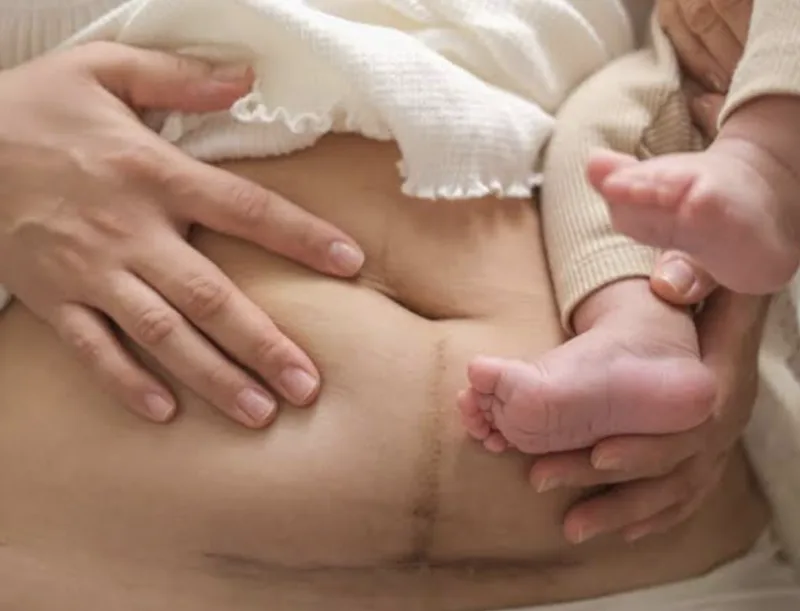
Search "C-section scar massage" and you'll find dozens of confident how-to guides. Search for the research behind it and you'll find far fewer studies than the confidence implies. Both things can be true at once: the evidence base is smaller than the internet suggests, and the technique is still worth doing. Here's the honest version of both.
What the evidence actually shows
A small case series treating chronic C-section scar pain with fascial scar release techniques recorded up to a 79% increase in pressure tolerance at the scar site over four weeks, a meaningful result, from a small, uncontrolled study.
A 2023 study comparing manual scar therapy methods found genuine improvements in scar mobility and pain from massage-based approaches, though the field still lacks large randomised trials specific to C-section scars. A trial currently underway is directly comparing myofascial release against deep friction massage for post-cesarean recovery, which should sharpen this picture considerably once it reports.
When to start
Not before your scar is fully closed, non-tender, and free of discharge, usually 6–8 weeks postpartum, and only after a doctor or physio has actually looked at it. Starting early on a scar that's still actively healing risks reopening tissue that hasn't finished knitting.
The technique
- Wash your hands and use a small amount of vitamin E oil, coconut oil, or plain moisturiser, lubrication matters more than which product you pick.
- Start with simple tracing. Run one fingertip directly along the scar line with no pressure, just to desensitise the area. Many C-section scars are numb in places and hypersensitive in others; this step re-familiarises your nervous system with the area.
- Add gentle circles. Once tracing is comfortable, make small circular motions directly on and just around the scar, still very light pressure.
- Progress to skin rolling. Gently pinch and lift the skin along the scar, rolling it between your fingers as you move along the line. This is where fascial adhesions actually get mobilised.
- Work in multiple directions. Up and down, side to side, and diagonal, adhesions don't form in only one plane, so neither should your massage.
- Stop at mild discomfort, never pain. A pulling or stretching sensation is expected. Sharp pain means back off.
Frequency: 2–5 minutes, once or twice daily, for 8–12 weeks. Consistency matters more than duration, brief daily massage beats occasional longer sessions.
What it actually helps with
Scar mobilisation is most useful for the tethering component of a C-section shelf, the pulling sensation that creates a pouch above the scar. It's not going to change excess skin, and on its own it won't close a diastasis, that needs the deep core work covered in our core exercises after C-section guide. The two are meant to be done together, not as alternatives.
The Mum21 program and scar work
The 12-Week Recovery Program introduces scar-safe movement from week 1 and flags exactly when scar mobilisation becomes appropriate for your specific timeline, so you're not guessing whether week 6 or week 9 is right for your healing.
FAQs
Because this guide mentions…
Clinical references
- Chronic caesarean section scar pain treated with fascial scar release techniques, a case seriessciencedirect.com
- Effectiveness of various methods of manual scar therapyonlinelibrary.wiley.com
- Myofascial release versus deep friction massage for abdominal recovery after cesarean section (ongoing trial)clinicaltrials.gov
Mum21 guides cite peer-reviewed research and professional physiotherapy guidance. They are educational and do not replace individual medical care.
Written by
Ana (Anastasia Uvarova)
Women's Health Physiotherapist
UK-qualified physiotherapist, founder of Alpha Physio Care
UK-qualified women's health physiotherapist and founder of Alpha Physio Care. Ana designed the Mum21 12-week recovery program.
Medically reviewed by
Mum21 Clinical Team
Editorial and clinical review
Physiotherapy-led editorial team
The Mum21 editorial team works with practising women's health physiotherapists to keep every guide accurate and current.
Last clinical review: 2 August 2026
Part of the C-Section Recovery topic hub, a physiotherapist-reviewed collection of guides on c-section recovery.
Join 10,000+ Mums
Honest, physio-backed postpartum recovery tips in your inbox. One email a week. No spam, ever.
No spam. Unsubscribe in one click.
Continue reading
The next steps in the c-section recovery learning path.
- Weight Loss After a C-Section: What Actually Changes, and WhenA realistic, physio-backed answer, not a 30-day plan promising your old body back. What's different about weight after a C-section specifically, and what actually helps. 7 min read · C-Section Recovery
- Is Yoga Safe After a C-Section? A Physio's Honest AnswerThe honest answer is "it depends on the pose and the week," not yes or no. Here's which yoga is genuinely safe after a C-section, which isn't yet, and why the difference matters. 6 min read · C-Section Recovery
- C-Section Recovery Tips: A Physio's Real Punch ListNot a generic "listen to your body" list. Specific, week-anchored things a women's health physio actually tells C-section patients, including the ones nobody mentions before you go home. 8 min read · C-Section Recovery
Related topics
Diastasis Recti
Everything on diastasis recti in one place: how to check your gap at home, what closes it, what makes it worse and how long real recovery actually takes.
15 guidesPelvic Floor
Leaks, heaviness, pressure management and pelvic floor training after birth, explained step by step by a UK-qualified women's health physiotherapist.
3 guidesCore Recovery
Deep core activation, breathing mechanics and progressive strength work that rebuild the postpartum core without doming, coning or pelvic floor strain.
9 guides