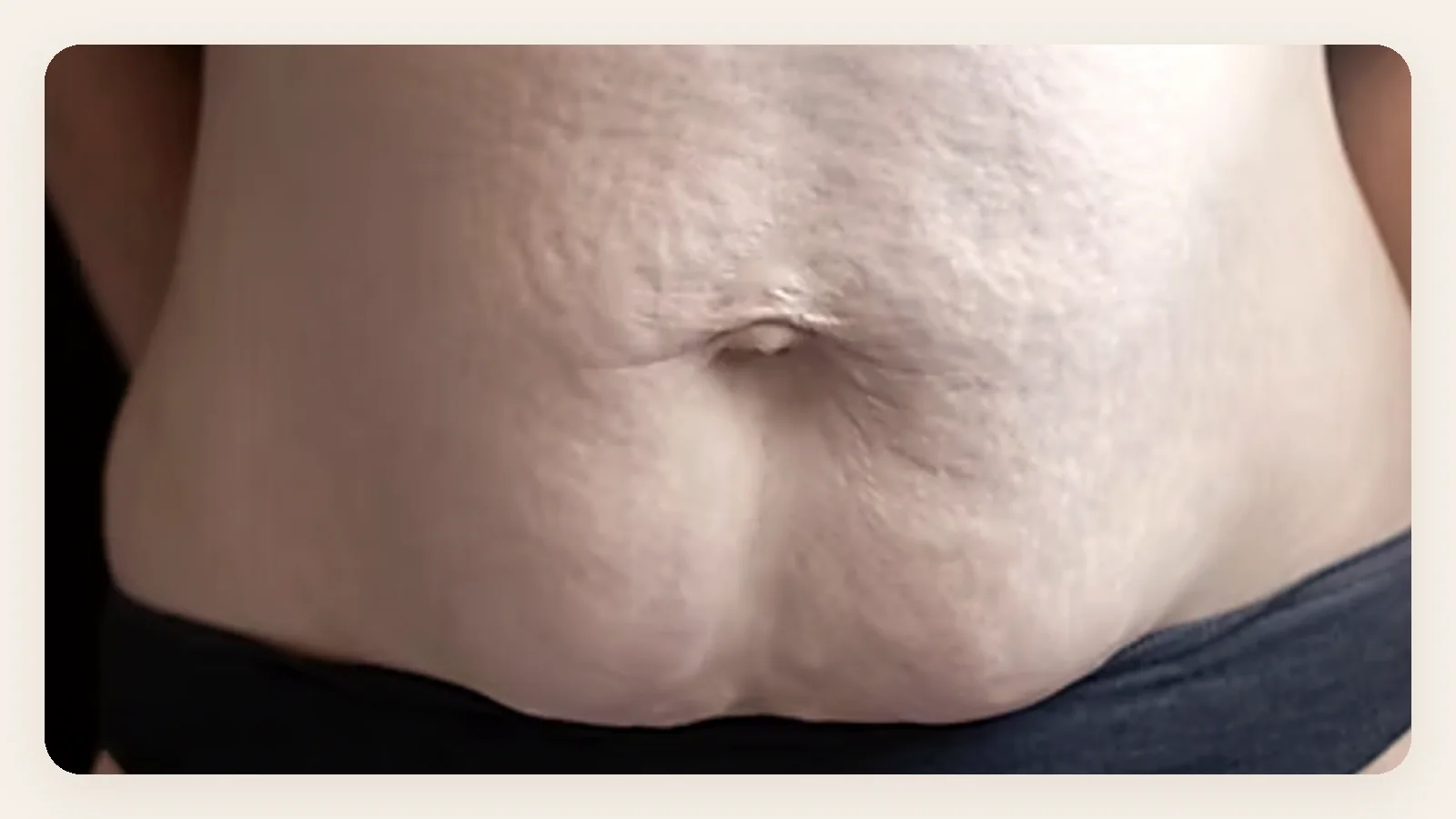
If Your Belly Still Looks Pregnant Tonight, Start Here
In this article
- Do this first — a 2-minute breath reset
- Why this helps more than crunches would
- What to avoid tonight
- What to do tomorrow
- When to book a 1:1 check
- FAQs
- Is it normal for my belly to still look pregnant months after birth?
- Will this breathing exercise fix my diastasis recti?
- What if I cannot feel my belly move when I breathe?
- Can I do this if I had a C-section?
- How soon will I see a change?
You have fed the baby, changed the sheets, answered three messages, and now you are standing in front of the mirror wondering why your stomach still looks four months pregnant.
You are not broken. You are not lazy. And you do not need a hard workout tonight.
Do this first — a 2-minute breath reset
Put your phone down. Lie on your back on a firm surface with your knees bent and feet flat. If lying flat feels uncomfortable, prop your upper back on a pillow.
Place one hand on your ribs and one hand on your lower belly. Close your mouth if you can. Breathe in slowly through your nose for four counts, feeling your ribs widen sideways. Breathe out through your nose for six counts, letting your ribs close and your lower belly soften inward.
Do this for two minutes. That is all.
This is called lateral breathing. It is the first step in almost every postpartum core recovery plan because it gently re-engages the deep abdominal muscle — the transversus abdominis — without forcing anything.
Why this helps more than crunches would
Your abdominal wall is not a flat sheet. It is a layered system. The top layer is the "six-pack" muscle. Underneath is the deep corset muscle. In between is the connective tissue that stretched during pregnancy.
When that connective tissue is still recovering, a crunch pushes pressure forward through the middle. That can make a mommy belly look more pronounced, not less.
Breathing does the opposite. It teaches the deep corset to draw inward and upward, which can reduce outward pressure and help the front wall rest in a flatter position.
What to avoid tonight
- Crunches, sit-ups, or planks
- Sucking your stomach in hard all evening
- Heavy lifting right before bed
- Any video that tells you to "burn off the baby weight"
If a movement makes your belly dome or bulge outward, stop. Doming is a sign that the exercise is creating pressure your midline is not ready to manage.
What to do tomorrow
When you wake up, try the same breathing once before you get out of bed. Then, if you feel ready, read our guide on how to check diastasis recti at home. It takes under a minute and gives you real information.
If you feel a gap of two finger-widths or more, or you see doming when you lift your head, that is useful data — not a verdict.
When to book a 1:1 check
See a women's health physiotherapist if:
- You feel a gap of four or more finger-widths
- You have back pain, pelvic heaviness, or leaking
- Your belly visibly domes during everyday movements
- You have tried gentle breathing for two weeks and nothing feels better
You can also book a 30-minute online assessment with our pelvic floor physio for ₹499. She will check your gap with you live and tell you exactly where to start.
FAQs
Because this guide mentions…
- Lateral Breathing BasicsThe breathing mechanic every deep-core exercise is built on.
- Pregnancy GuidesSafe loading and prevention across all three trimesters.
- Pelvic Floor GuideWhy leaks and heaviness happen, and how to train the floor properly.
- Diastasis Recti GuideAssess the gap, understand what closes it, and progress safely.
Written by
Ana (Anastasia Uvarova)
Women's Health Physiotherapist
UK-qualified physiotherapist, founder of Alpha Physio Care
UK-qualified women's health physiotherapist and founder of Alpha Physio Care. Ana designed the Mum21 12-week recovery program.
Medically reviewed by
Mum21 Clinical Team
Editorial and clinical review
Physiotherapy-led editorial team
The Mum21 editorial team works with practising women's health physiotherapists to keep every guide accurate and current.
Last clinical review: 17 August 2026
Part of the Diastasis Recti topic hub, a physiotherapist-reviewed collection of guides on diastasis recti.
Join 10,000+ Mums
Honest, physio-backed postpartum recovery tips in your inbox. One email a week. No spam, ever.
No spam. Unsubscribe in one click.
Continue reading
The next steps in the diastasis recti learning path.
- Pregnant Again With Diastasis Recti: What Changes the Second TimeOne study found the single biggest jump in gap width happens between the first and second pregnancy, not the third or fourth. If you're expecting again and never fully closed from last time, here's what that actually means. 7 min read · Diastasis Recti
- How Accurate Is the Finger Test for Diastasis Recti, Really?Your own fingers are a genuinely reliable way to track your own progress over time. They're not the same as an ultrasound. Here's exactly what each is actually good for. 6 min read · Diastasis Recti
- Diastasis Recti After Twins: Why It's Different, and What Actually HelpsCarrying twins is an independent risk factor for both having diastasis recti and having a more severe gap. If your recovery feels harder than the advice you're reading, this is probably why. 7 min read · Diastasis Recti
Related topics
C-Section Recovery
Physio-led guidance on cesarean healing: scar mobility, the C-section shelf, safe timelines and exactly when to restart core work after your surgery.
11 guidesPelvic Floor
Leaks, heaviness, pressure management and pelvic floor training after birth, explained step by step by a UK-qualified women's health physiotherapist.
4 guidesCore Recovery
Deep core activation, breathing mechanics and progressive strength work that rebuild the postpartum core without doming, coning or pelvic floor strain.
14 guides