Postpartum Constipation and Your Pelvic Floor
In this article
- Why constipation happens after birth
- The toilet position that actually works
- The 4-4-4 hydration rule for breastfeeding mothers
- What to add to your plate
- The pelvic floor connection
- When to see a doctor
- FAQs
- Are laxatives safe while breastfeeding?
- Why is it worse after a C-section?
- Can straining cause diastasis recti to get worse?
Nearly half of postpartum women have constipation in the first month. Straining doesn't just hurt, it stretches an already vulnerable pelvic floor and puts pressure on healing tissue.
Why constipation happens after birth
- Progesterone drops, disrupting gut motility
- Iron in postpartum supplements slows things down
- Fear of pain (stitches, hemorrhoids) makes you hold on
- Dehydration from breastfeeding
- Reduced movement in the first few weeks
The toilet position that actually works
Your bowels evacuate best when your knees are higher than your hips. Sitting flat on a Western toilet closes the anorectal angle, forcing you to strain. Squatting opens it.
Fix in 10 seconds:
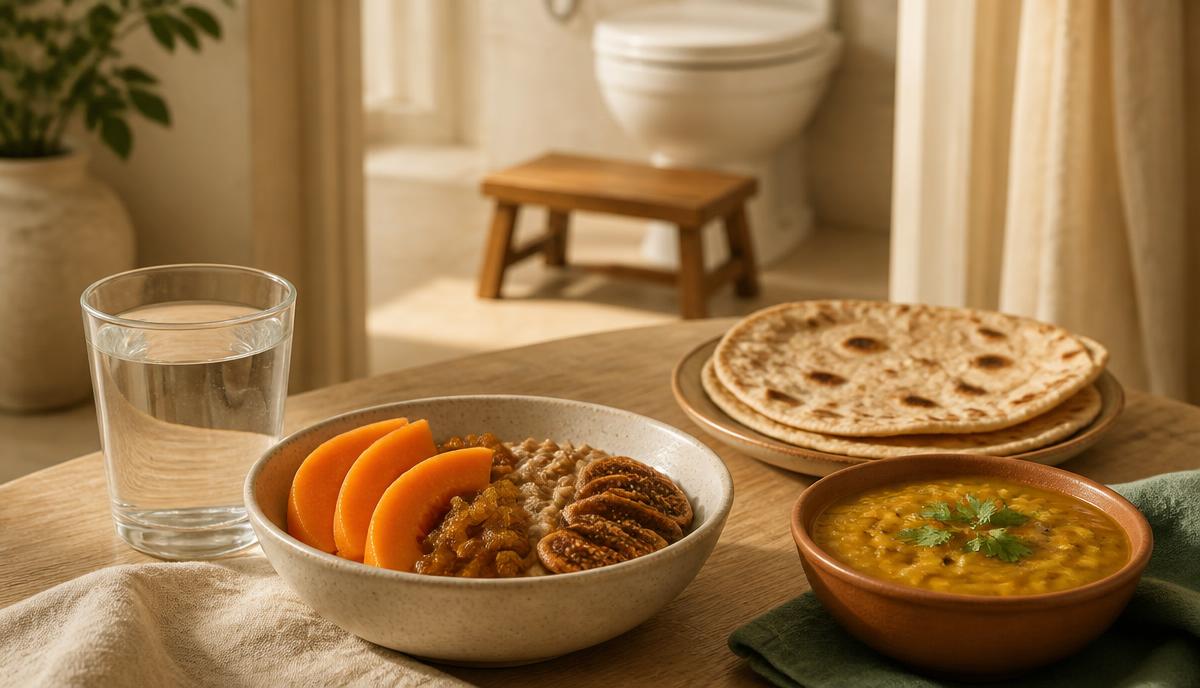
- Place a small stool (or two folded bath towels) under your feet
- Lean forward, elbows on knees
- Let the belly relax outward (this is the opposite of "sucking in")
- Exhale, don't push. Never hold your breath and bear down.
The 4-4-4 hydration rule for breastfeeding mothers
- 4 glasses of water first thing in the morning
- 4 glasses spread across the day
- 4 glasses in the evening (spread out so you don't wake at night)
That's 3 litres. Most postpartum constipation resolves at this hydration level alone.
What to add to your plate
- Soluble fibre daily: oats, chia seeds (soaked), soft cooked apples, papaya
- Insoluble fibre: wholegrain roti, ragi, cooked green vegetables
- Healthy fats: ghee, nuts, seeds, olive oil, they lubricate stool
- Warm liquids in the morning: warm water with lemon, or ajwain water
The pelvic floor connection
Chronic constipation from straining is the leading non-birth cause of pelvic organ prolapse. If you've been straining for weeks, you may notice heaviness, a bulge, or difficulty emptying. See a pelvic floor physio.
When to see a doctor
- No bowel movement for 4+ days despite hydration and diet
- Blood in stool (small amount from hemorrhoids is common but confirm)
- Severe abdominal pain
- Straining continues after 6 weeks postpartum
Passing stool should not be a workout. If it is, the problem isn't your effort, it's your position, your hydration, or your pelvic floor.
FAQs
Because this guide mentions…
- Pelvic Floor GuideWhy leaks and heaviness happen, and how to train the floor properly.
- C-Section RecoveryScar mobility, the C-section shelf and a safe return to core work.
- Diastasis Recti GuideAssess the gap, understand what closes it, and progress safely.
- Postpartum NutritionThe repair nutrition that supports connective-tissue healing.
Written by
Ana (Anastasia Uvarova)
Women's Health Physiotherapist
UK-qualified physiotherapist, founder of Alpha Physio Care
UK-qualified women's health physiotherapist and founder of Alpha Physio Care. Ana designed the Mum21 12-week recovery program.
Medically reviewed by
Ana (Anastasia Uvarova)
Women's Health Physiotherapist
UK-qualified physiotherapist, founder of Alpha Physio Care
UK-qualified women's health physiotherapist and founder of Alpha Physio Care. Ana designed the Mum21 12-week recovery program.
Last clinical review: 22 June 2026
Part of the Pelvic Floor topic hub, a physiotherapist-reviewed collection of guides on pelvic floor.
Join 10,000+ Mums
Honest, physio-backed postpartum recovery tips in your inbox. One email a week. No spam, ever.
No spam. Unsubscribe in one click.
Continue reading
The next steps in the pelvic floor learning path.
- Diastasis Recti, Core Recovery, and Intimacy After BirthNobody hands you a guide for this part. A weak core and an unsettled pelvic floor are both real, connected reasons intimacy can feel different after birth — and both are things you can actually work on. 6 min read · Pelvic Floor
- What Celebrity "Bounce Backs" Don't Show YouShilpa Shetty's aerial yoga. Alia Bhatt's warrior pose, weeks after delivery. The reels are real. What's happening underneath them almost never makes it into the caption. 7 min read · Pelvic Floor
- Why You Leak When You Sneeze (And How to Stop)Leaking a little when you laugh or sneeze isn't "just part of being a mum". It's a sign your pelvic floor needs attention, and it's very fixable. 6 min read · Pelvic Floor
Related topics
Diastasis Recti
Everything on diastasis recti in one place: how to check your gap at home, what closes it, what makes it worse and how long real recovery actually takes.
18 guidesC-Section Recovery
Physio-led guidance on cesarean healing: scar mobility, the C-section shelf, safe timelines and exactly when to restart core work after your surgery.
11 guidesCore Recovery
Deep core activation, breathing mechanics and progressive strength work that rebuild the postpartum core without doming, coning or pelvic floor strain.
14 guides